
Every few months, wellness culture hands us a new noun to “-max.” Sleepmaxxing. Looksmaxxing. Mewing (a whole category unto itself). Most of these trends have the shelf life of a TikTok sound and the scientific backing of a fortune cookie.
Then fibermaxxing showed up, and something strange happened: dietitians didn’t roll their eyes. They nodded.
Let’s break down what this trend actually is, why the people with actual nutrition degrees are into it, and how to do it without turning your digestive system into a science experiment.
What is Fibermaxxing?
What is fibermaxxing, stripped of the internet jargon? It’s the deliberate practice of front-loading your meals with fiber — from beans, whole grains, fruit, vegetables, seeds, and legumes — instead of treating it as an afterthought you remember exists once a week.
That’s it. No teas. No powders promising to “flush toxins.” No 4 a.m. cold plunge required.
The “maxxing” part just means being intentional: checking labels, swapping refined grains for whole ones, and asking “where’s the fiber in this?” before you ask “where’s the protein?” It’s less a diet and more a mindset shift — which, frankly, is why nutritionists like it. It doesn’t ask you to cut anything out. It asks you to add something in.
Why This One Isn’t Just Marketing Fluff
Most wellness trends get a raised eyebrow from professionals because they’re built on a supplement someone needs to sell. Fibermaxxing is refreshingly boring in that department — the “product” is oats. The “protocol” is beans.
The Institute of Medicine has long recommended roughly 25 grams of fiber a day for women and 38 grams for men, and the uncomfortable truth is that most Americans land closer to 15 grams. That gap is exactly what fibermaxxing is trying to close. So when people ask what is fibermaxxing really solving, the honest answer is: a decades-old nutrition gap that finally has a catchy name.
The Actual Benefits of Fibermaxxing
Here’s the part that earns the nutritionist stamp of approval:
- Digestion gets smoother — fiber feeds the good bacteria in your gut and keeps things, well, moving.
- Blood sugar stays steadier because fiber slows how fast sugar hits your bloodstream.
- Fullness lasts longer, which naturally curbs the 3 p.m. vending machine spiral.
- Cholesterol can improve, since soluble fiber binds to it on its way out.
- Longevity research keeps circling back to fiber intake as one of the more consistent markers of a long, disease-free life.
None of this requires perfection. It requires beans at lunch instead of white rice, and an apple instead of a granola bar that’s mostly sugar wearing a fiber costume.
So How Do You Actually Fibermaxx?

Think of it less as a 30-day challenge and more as a series of small swaps you make permanent. If you’ve ever tried our 5 easy diet swaps that make a big difference, you already understand the logic — fibermaxxing is basically that philosophy pointed squarely at one nutrient.
A few starter moves:
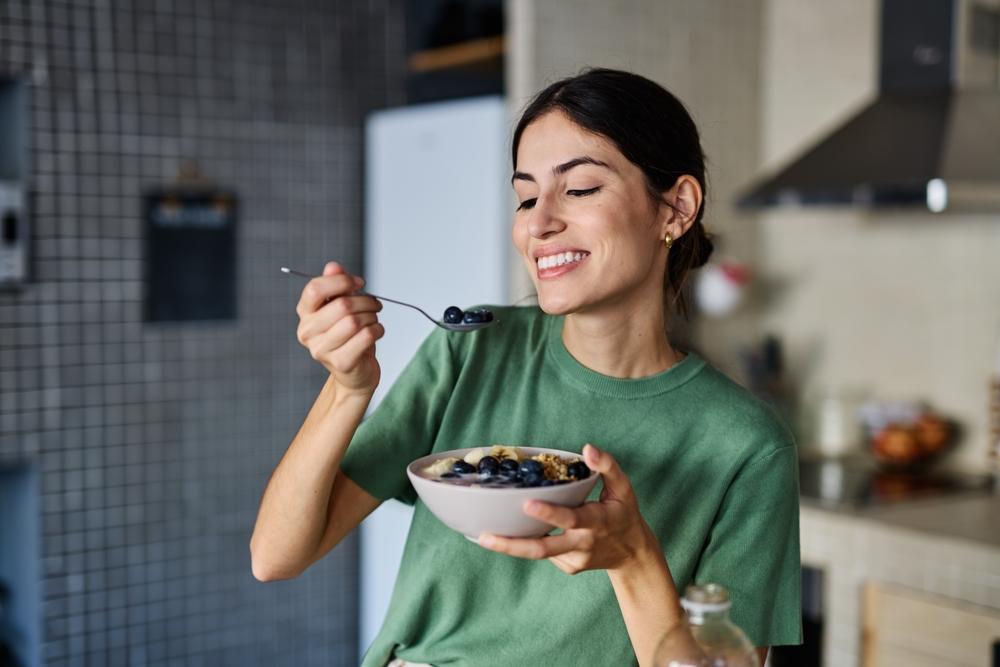
- Upgrade your breakfast. Swap sugary cereal for oats, chia, or a whole-grain toast piled with avocado.
- Snack with intention. Prepping ahead makes this stick, which is where a stash of freezer-friendly healthy snacks earns its keep — pull one out instead of reaching for chips.
- Bulk up your protein routine. If you’re already leaning on protein-forward snack recipes, look for the ones built on lentils, chickpeas, or nut butters — you’ll double-dip on fiber and protein at once.
- Leave the skin on. Potatoes, apples, cucumbers — most of the fiber lives just under the surface.
- Read labels like a detective. “Wheat flour” is not “whole wheat flour.” They are not the same person in a trench coat.
But is This Actually Sustainable, or Just This Year’s Trend?
Fair question. Wellness culture has trained us to be suspicious of anything with a catchy name, and rightly so. But what is fibermaxxing compared to, say, an elimination diet or a 5 a.m. supplement stack? It’s closer to habit-stacking than trend-chasing.
That’s also why it pairs so well with other low-effort, high-return habits people are already building into their routines — the kind you’d find in a solid morning routine built for a genuinely productive day. Add a fiber-rich breakfast to a routine you already follow, and you’re not adding a new habit — you’re upgrading an existing one.
There’s also a gut-brain connection worth mentioning: emerging research keeps linking gut health to mood and stress resilience, which means a fiber-forward plate might be doing quiet work alongside whatever you’re using for managing everyday stress without torching your productivity.
The Nutritionist Verdict on Fibermaxxing
If you ask a registered dietitian to name the single most under-discussed nutrient in the average American diet, fiber wins almost every time. So when a TikTok trend accidentally aligns with what nutrition science has been saying for decades, the professionals aren’t going to fight it — they’re going to ride the wave straight into their patients’ grocery lists.
What is fibermaxxing, at the end of the day? It’s proof that sometimes the wellness internet stumbles onto something genuinely useful, sandwiched between the questionable stuff. No powders, no 47-step protocol — just beans, oats, and vegetables getting their long-overdue main character moment.
Start with one meal. Add a can of chickpeas to your salad, or oats instead of a pastry. Momentum does the rest — and if you need a little structure to keep it going, treating it like any other habit you’d track in one of the productivity apps designed to organize your life isn’t a bad shout either.




Leave A Comment