
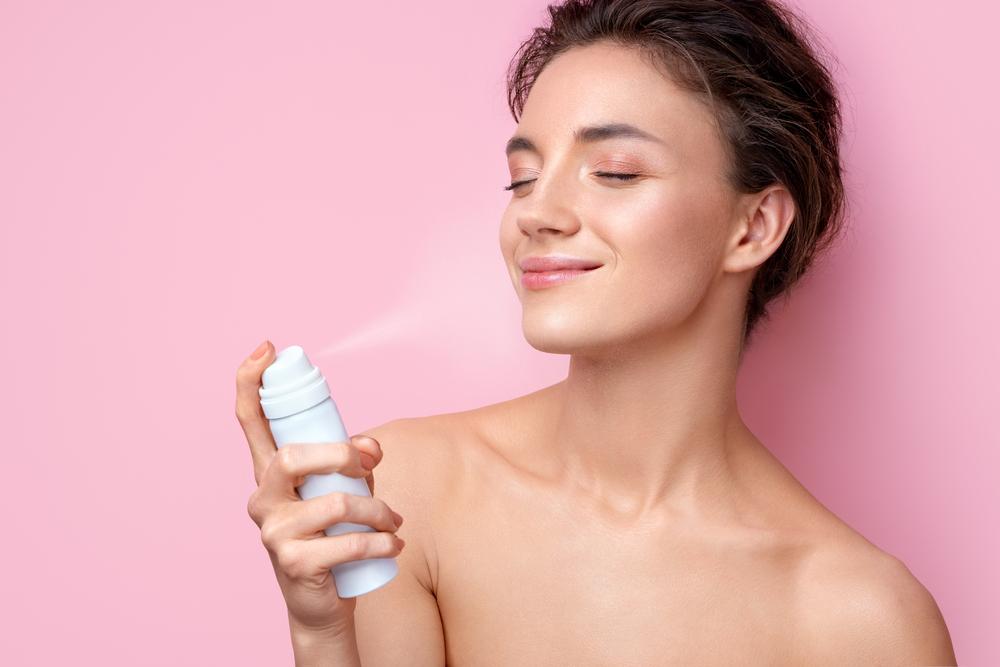
Two bottles sit on your vanity. Both say “spritz on face.” Both smell faintly like a spa. At 7:45 a.m., they look like the same product in different outfits.
They are not. The face mist vs setting spray question comes down to one thing: are you treating skin, or protecting makeup?
Mix them up and you get makeup that taps out by lunch, or a sticky, streaky mess. Here’s what each bottle actually does, how to tell them apart in ten seconds, and the application tricks most guides skip.
What a Face Mist Actually Does
A face mist is skincare with a spray nozzle. Most are water-based and built around humectants (moisture magnets) like glycerin, hyaluronic acid, aloe, or rose water.
The job: a quick hit of freshness and a temporary plump, dewy look. Use it before makeup to prep, or after to revive.
Here’s the part the label skips: water alone evaporates. A mist with nothing sealing it in can leave skin feeling tight once it dries.
So treat mist as the thinnest layer in your routine, the same thinnest-to-thickest logic behind layering your skincare products like a pro. Mist first, moisturizer on top.
What a Setting Spray Actually Does
Setting spray is a makeup product, and its engineering is totally different. The formula pairs a carrier liquid (water, often with alcohol) with film-forming polymers, such as acrylates copolymer or PVP.
When you spray, the liquid evaporates. The polymers left behind link into a thin, flexible mesh over your makeup. That mesh helps resist sweat, transfer, and fading, and it melds powder and cream layers so they read as skin instead of a stack of products.
Two reality checks: it won’t make makeup waterproof, and it won’t rescue a bad base. It extends wear. It doesn’t perform exorcisms.
Face Mist vs Setting Spray: The 10-Second Label Test
Ignore the marketing. Flip the bottle and scan the first five ingredients:
- Glycerin, hyaluronic acid, aloe, rose water, panthenol: face mist territory. Hydration is the point.
- Acrylates copolymer, PVP, or another film-forming polymer: setting spray. That’s the hold.
- Alcohol near the top: dries fast and fights humidity, but can feel tight on dry or sensitive skin.
- Silica, starches, or clay: a matte setting spray that absorbs oil.
- Humectants and polymers together: a hybrid. Handy on light-coverage days. For a ten-hour event, a true setting spray still wins.
Can You Swap One for the Other?
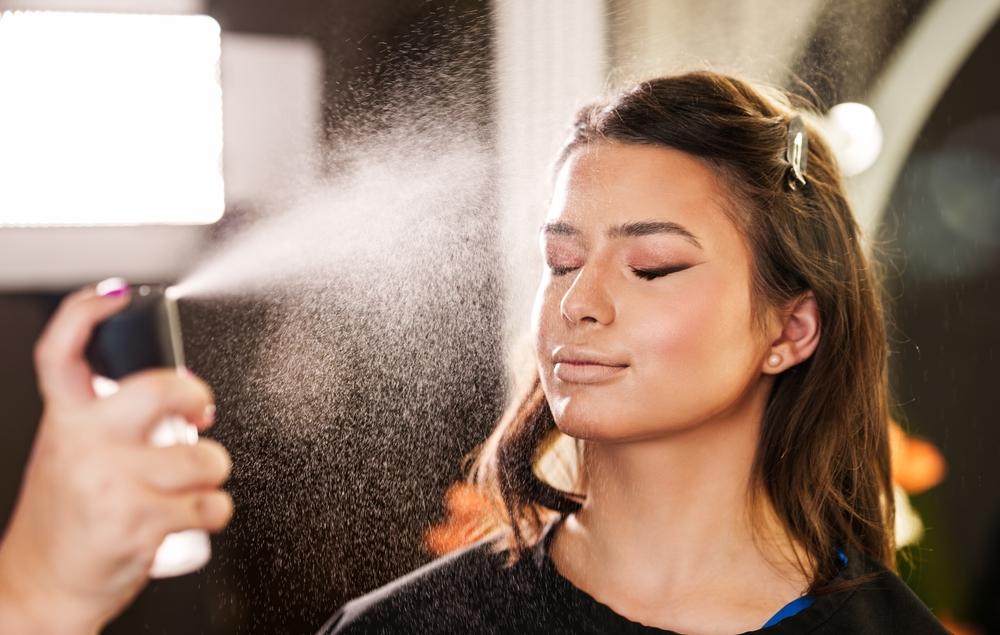
The face mist vs setting spray swap works in one direction only.
A mist over finished makeup gives a dewy, hydrated look, but it won’t lock anything in. Setting spray on bare skin, meanwhile, is just a polymer film (and maybe alcohol) sitting on your face. That isn’t skincare.
Five Application Tricks Worth Knowing
1. Mist, then seal within a minute. Spritz clean skin, then press in the right serum for your skin while it’s still damp. Humectants need water to grab, and damp skin hands them some. Moisturizer goes last to keep it there.
2. Set twice, not once. Apply a light mist of setting spray after foundation and concealer. Let it dry. Add powder, blush, and bronzer, then finish with a second mist. Your base gets locked first, so powder can’t undo it.
3. Distance and drying time matter. Hold setting spray about 10 inches away and sweep an X, then a T. Any closer and you get droplets and streaks. Shake it first, since matte formulas with powders settle, then keep your hands off for about a minute so the polymers can form their mesh.
4. Match the formula to your skin. Dry or dehydrated? Pick an alcohol-free, hydrating setting spray with glycerin or hyaluronic acid. Oily? Choose a matte formula with silica or starches. And if you’re chasing the soft-focus cloud skin finish dominating 2026, a hydrating setting spray is what melds powder and cream into that haze.
5. Refresh midday without making mud. Blot oil first. Hold a face mist 12 inches away, take one light pass, then press with your fingertips. Piling mist onto a slick, powdered T-zone just creates patchy makeup.
When the Air is the Real Problem
Sometimes the culprit isn’t your product. It’s the air. Air conditioning and winter heating pull moisture from skin, and they sit high on the list of everyday things that dry out your skin. A mist can help, but only if moisturizer follows.
Travel makes it weirder. If you’re packing for a dry or cold destination, a travel-size mist earns its spot in your carry-on (keep it to 3.4 ounces for TSA). Headed somewhere sticky and humid? Pack the polymer-based setting spray instead.
One housekeeping note: both are water-based, so keep them out of hot cars and steamy showers, wipe the nozzle now and then, and check the open-jar symbol on the label for how many months it’s good after opening.
If Your Skin is Sensitive
Sensitive skin gets a few extra rules. Look for alcohol-free, dermatologist-tested formulas, and be wary of heavy fragrance, which is one of the most common triggers for irritation.
Patch test any new bottle on your jawline for a couple of days before it goes anywhere near your eyes. Close your eyes and mouth while spraying, too. Nobody wants a surprise mouthful of rose water.
Four Face Mist & Setting Spray Myths Worth Retiring

“A mist sets makeup.” It makes makeup look dewy. It doesn’t make it last.
“More spray means more hold.” Soaking your face dilutes powder, drips, and takes forever to dry. Two light passes beat one drenching.
“Alcohol is always the villain.” Not exactly. On oily skin in humid weather, a quick-drying formula can be a lifesaver. It’s dry or sensitive skin that tends to protest.
“Mist can replace moisturizer.” Mist adds water. Moisturizer helps keep it there. They’re teammates, not substitutes.
Your Morning Sequence, Start to Finish
Here’s how it all fits together on a normal weekday:
- Cleanse. Start with a clean slate.
- Face mist. One light pass on bare skin.
- Serum, moisturizer, SPF. Press them in while skin is still slightly damp.
- Base makeup. Foundation and concealer, then a light mist of setting spray. Let it dry.
- Powder, blush, bronzer. Add them over the dry base.
- Final setting spray. One more pass at 10 inches, then hands off for a minute.
At night, skip both bottles and cleanse thoroughly. If you wore makeup under a polymer film, a double cleanse is your friend.
Quick Face Mist vs Setting Spray Cheat Sheet
| Situation | Reach for |
|---|---|
| Prepping skin before makeup | Face mist |
| Makeup must survive a 10-hour day | Setting spray |
| Skin feels tight after a flight | Face mist, then moisturizer |
| Powder looks cakey | Hydrating setting spray |
| Humid, sweaty event | Polymer-based setting spray |
| Midday refresh | Blot, then one light mist |
The Bottom Line on Face Mist vs Setting Spray
The face mist vs setting spray showdown isn’t a rivalry. One keeps skin comfortable. The other keeps makeup in place.
Mist before makeup, setting spray after, moisturizer in between, and you get the best of both.
Which bottle is winning on your vanity right now? Tell us in the comments, and subscribe for more makeup and skin care breakdowns that skip the fluff.


Leave A Comment